The migration of the Prophet illustrates the principle that no matter how something is desired by us, we should never hesitate to sacrifice it for the sake of our faith or ideal. Worldly material and things of value can never and should never take the place of our faith; nor can the faith be exchanged away for the entire world.
Makkah was the birthplace of the Prophet (saws) and his companions. It was also the city of Holy kaaba. Yet, nothing stood in the way of bidding farewell to their hearts and homes, families and kinsmen just for the the freedom of conscience and liberty to practice Islam.
Finally, Hijrah is not only a physical migration, but more importantly it is a spiritual migration. To attain true Hijrah, we have to work on our Faith, our knowledge and our actions, so that we are able to worship Allah and pull away from Haram; make our Faith strong, and face the trials and tests of staying on the straight path; and migrate away from what Allah has forbidden to worshipping as Allah has ordered.
Let us pray that we can all be a true immigrant, and migrate away from leading a life of desire and vanities to a life of humbleness and thankfulness. Allahumma Ameen.
28.11.11


Hijrah 1433
 It is appropriate for us to reflect a while on the significance of the important event of Hijra in the history of Islam.
The Islamic calendar was first introduced by the close companion of the Prophet, 'Umar ibn Al-Khattab (R). During his Khilfah, the need to introduce a new Islamic calendar raised. After consultation with other prominent companions, it was agreed that the most appropriate reference point for the Islamic calendar was the Hijrah, since it was an important turning point for the Muslim community, the history of Islam and infact the history of this world. It was only after the migration to Madinah that the Muslims were able to organize and establish the first real Muslim "community," with social, political, and economic independence.
Let us briefly look at some points related to the beautiful story of Hijrah, the blessed journey of the Prophet (saws) and his companion Abu Bakr (r) through the lonely desert from Makkah to Madina.
As the Muslims started migrating to Madina, the Quraysh decided to end the Prophet (s) blessed life by assasinating him jointly. They chose to do it one night, and waited outside his house waiting to kill him the moment he left his house early in the morning. Allâh, the All-Mighty, however, had other plans. The Prophet (Peace be upon him) came out of the house and cast some dust at them and managed to work his way through them reciting verses from the Noble Qur’ân: which can be translated as
· “And We have put a barrier before them, and a barrier behind them, and We have covered them up, so that they cannot see.” [36:9] (surah Yasin)
The unbelieving Quraysh of Mecca were bitterly set against the Prophet (saws). Yet they were absolutely convinced of his truthfulness and trustworthiness, and chose to trust him with their valuable belongings. When Allah’s orders for the Prophet (saws) to migrate to Madina was revealed, He had a number of their things committed to his trust. He, therefore, charged ‘Ali to return these to their owners before leaving Mecca.
Instead of taking the direct road to Madinah Prophet (saws) and Abu Bakr (r) walked for 5 miles in the opposite direction and took refuge for three nights in a cave in rough rocky mountain called Thawr. ‘Abdullah, the son of Abu Bakr would go to see them after dusk, stay the night there, inform them of the latest situation in Makkah. ‘Amir bin Fuhairah, the slave of Abu Bakr (r) used to supply them with milk at night and Asma (r), Abu Bakrs daughter brought them food by walking this long distance, although she was pregnant at than time.
‘Abdullah bin Uraiquit, a guide hired by Abu Bakr (r) who was not yet Muslim then, reached the cave after three nights, bringing with him Abu Bakr’s two camels which he had arranged especially for this journey. During the long journey to Madina, they took the hardly ever used ways along the coastal route, instead of the short and straight path that was commonly used then.
We have hightlighted these brief points to show that The Hijrah was not a random flight but a carefully planned migration. What lessons can we draw from these incidents?
First of all, we learn that if something is not working out as planned, we should look for alternatives just like the Prophet looked for alternative land to establishing the deen when efforts at Makkah failed, and the Quraysh of Makkah opposed Islam with strong force.
We also see that the Prophet (saws) did not forget his duties and his trust to the Makkans, people who wanted to kill him, even at this dangerous and difficult moment. So, we should also learn to be trustworthy and honest in all circumstances, and with all people, Muslims and non Muslims alike. We must be trustworthy in our job, in our studies, in our businesses, in all our affairs of this life and hereafter.
Further, although this migration was in the way of Islam and by the orders of Allah, both the Prophet (saws) and Abu bakr (r) left no stones unturned to prepare for this journey in the best possible way. They knew that Allah will help them, yet Abu bakr (r) bought and prepared camels for their journey, they took the help of a non-Muslim bedouin guide, they hid in the cave. Instead of taking direct path, they took long and dangerous routes. Similarly in our worldly affairs and more importantly in the matters of the deen, and working for the deen, we also need to be well prepared and do things in the best possible way. We know that we must rely on Allah, but only after careful planning. Also we learn from this incident that there is no fault in taking help from non-Muslim experts.
Finally, we also see the dedication, hard work and sacrifice of those around the Prophet (saws) and his blessed companion. For example, Ali (r) had to have a lot of courage to lie in Prophets bed knowing that there are angry men waiting outside to kill the Prophet (saws) and they could have killed Ali (r) in the place of Prophet (saws). Also we see the dedication of Asma (r) who walked all the way from Makkah in pregnant condition to serve food for the beloved prophet (saws) and her father.
These are not mere stories for us to listen and then forget. These stories and incidents are there for us to learn and take lessons for our daily life and our activities. We need to contemplate on these beautiful stories of sacrifice and struggle and try to implement their lessons in our everyday life.
Can you imagine walking in the desert sun of Arabia for around two weeks. The temperature is about 50 degrees? For whom did the Prophet (saws) and his companions suffer this hardship? Could they not have decided to stay in Makkah in the comfort of their houses and among their people? Did not the Quraiysh offer Prophet (saws) to give wealth and power and whatever he may want?
Do you know why the Prophet (saws) left Makkah, his birthplace, although it was the dearest place to him? He (saws) did this so that the message of Islam survive beyond their life. It is because of all the sufferings and hardship of the Prophet (saws) and all his companions that you and I and all of us are blessed to get the message of Islam. It is because of their Hijrah that day, that Islam got established and reached all the corners of this world today.
This migration of the Prophet (saws) also has relevance in our own lives: If we live in a place where our faith and our very life is in danger, we should move away; as many of us here have done. We are told in the Holy Quran, that when the angels of death question those who sinned, they will accept no excuses. The angels will ask: Was Allah’s earth not wide enough for you to move away from a sinful environment?
At a deeper level, the Hijrah is also a spiritual migration. If our lives are too much concerned with material things, with our own personal vanities, our likes and dislikes, our comfort and amusement, then we need a to make a spiritual Hijra, spiritual migration. We need to re-organise our priorities in life. We need to re-focus our heart, our emotions and our desires on something higher and nobler than ourselves. Material things should never be the main goal in life. Our main concern should be, to seek the good pleasure of Allah in everything we do.
If, in the process, wealth and good fortune comes our way, we should consider it as a by-product of serving Allah. We should hold onto these things lightly, at arms’ length, not close to the heart. It should be a bonus, not the main agenda. We must not dedicate our life for this purpose alone. There are very beautiful verses in Sura Ale Imran that reminds us, which can be translated as:
“14. Fair in the eyes of men is the love of things they desire: Women and sons; Heaped-up hoards of gold and silver; horses branded (for blood and excellence); and (wealth of) cattle and well-tilled land. Such are the possessions of this world’s life; but in nearness to Allah is the best of the goals (To return to).
15. Say: Shall I give you glad tidings of things far better than those? For the righteous are Gardens in nearness to their Lord, with rivers flowing beneath; therein is their eternal home; with companions pure (and holy); and the good pleasure of Allah. For in Allah.s sight are (all) His servants,-
16. (Namely), those who say: “Our Lord! we have indeed believed: forgive us, then, our sins, and save us from the agony of the Fire;”-
17. Those who show patience, Firmness and self-control; who are true (in word and deed); who worship devoutly; who spend (in the way of Allah.; and who pray for forgiveness in the early hours of the morning.
The migration of the Prophet illustrates the principle that no matter how something is desired by us, we should never hesitate to sacrifice it for the sake of our faith or ideal. Worldly material and things of value can never and should never take the place of our faith; nor can the faith be exchanged away for the entire world.
Let us mark this Islamic New Year with personal thinking, reflection and re-dedication. Let us refocus our attention on pleasing our Maker, our Lord, and achieving that noble status that He has assigned for us, that is the status of the best of Creation. Let us make a fresh start, to steer our lives from where we are, to where Allah wants us to be. There cannot be a more important journey in our lives than this spiritual Hijrah, the true Hijrah.
Let us pray that we can all be a true immigrant, and migrate away from forbidden things to the way of serving Allah, from doing thing which displeases Allah to that which pleases Him, from leading a life of desire and vanities to a life of humbleness and thankfulness. Allahumma Ameen.
31.10.11
first ten days of Dhul Hijja
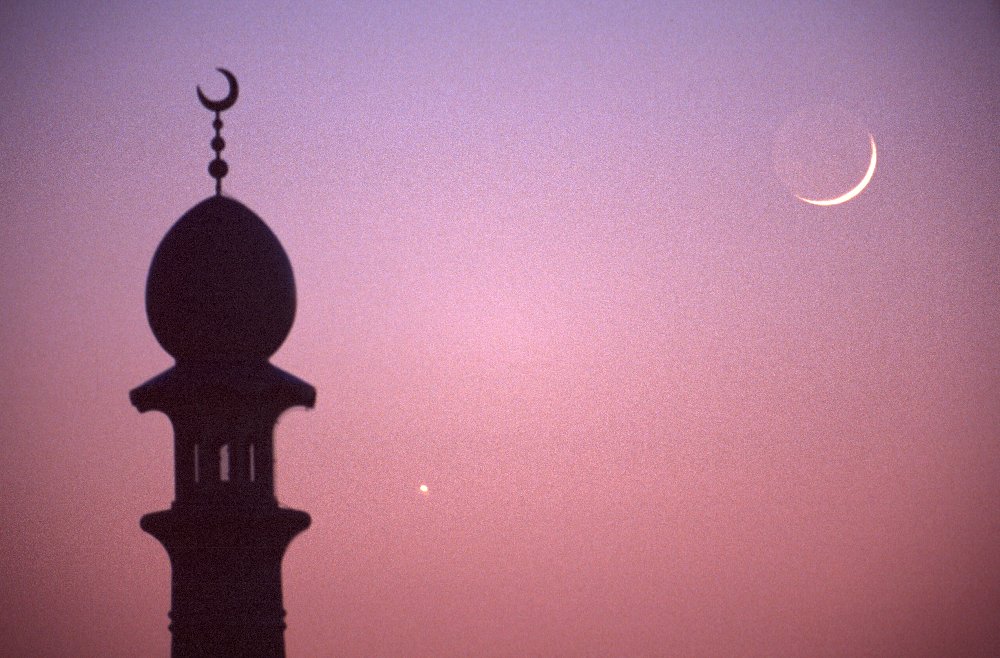 We are in the first ten days of Dhul Hijjah. Many Muslims are gathered in the holy city of Makka to perform Hajj during this time. Unfortunately, many of us are not among the Hujjaj. Yet Allah SWT in His infinite mercy, has given us an opportunity to share some of their rewards by making the first ten days of this month, more virtuous than other days. This is so that we can increase our good deeds and try to wipe away our sins. According to the scholars, these ten days are the ten best days of the year and the 9th Dhul Hijja, the day of Arafat is one of the best day of the year.
We should all try to exploit those golden days. Some of the recommended actions for these days are:
1. Praying Tahajjud Prayer
2. Fasting, especially in the ninth, the day of Arafat.
3. Saying Takbeer, Tahlil, Tasbeeh and Tahmid.
4. Making a sacrifice following the tradition of our father Ibrahim (a) seeking Allah's pleasure.
5. Repenting from our sins
6. Doing other good deeds, such as reading Qur'an, remembering Allah, honoring parents, and others.
7. Last but not least, making doa; especially on the day of Arafat, which is one of the best days to make doa.
May Allah give us all Tawfique to take advantage of these blessed days.
24.8.11
Last ten days of Ramadan and Laylatul Qadr
All praises and thanks to Allah (swt) for enabling us to witness this blessed month of Ramadhan in good health and safety so far.
This last ten days of Ramadhan are very important in the life of a Muslim, as we can see from the life of Prophet Muhammad (s). They holy Prophet (s) was seriously doing ibadah in the month of Ramadhan more than any other months. And even within the month of Ramadhan, when the last ten days would arrive, he was much more serious than other twenty days.
To get the most out of it, Muhammad (s) used to enter Itikaf for the last ten days. Where he used to stay in seclusion in the mosque and dedicate himself solely to worshipping Allah (swt) and drawing himself closer to Allah. Besides increasing his own Ibadah, Prophet (s) would also wake his wives and family members.
Alhamdulillah these ten days are with us. we need some serious planning so that we dont have to regret loosing these days after they are over. Rather, let us prepare ourselves so as to make best use of the special days lying ahead of us.
Another significance of these ten days is the presence of a very important and special night among the nights of this last ten days, the night of power, the night of blessing, the laylatul Qadr.
What is Layltul Qadr?
This is the night in which Allah has chosen to reveal the Holy Quran, His blessed words.
Laylatul Qadr is the most blessed night. A person who misses it has indeed missed a great amount of good. On the other hand, those who catch the opportunity, their gift is that of past sins wiped away.
Imam Ahmad recorded that Abu Hurayrah reported "When Ramadan would come, the Messenger of Allah would say:
(Verily, the month of Ramadan has come to you all. It is a blessed month, which Allah has obligated you all to fast. During it the gates of Paradise are opened, the gates of Hell are closed and the devils are shackled. In it there is a night that is better than one thousand months. Whoever is deprived of its good, then he has truly been deprived.)
When is Laylatul Qadr ?
Narrated by 'Aisha: Allah's Apostle said,
"Search for the Night of Qadr in the odd nights of the last ten days of Ramadan."
What should one do in Laylatul Qadr?
It is reported on the authority of Abu Hurairah, that Allah’s Messenger (Sallallahu alaihi wa sallam) said: “Whoever stood in prayer on the night of Al-Qadr, in faith and hoping for a reward from Allah, he will have all of his previous sins forgiven.” (Narrated by Al-Bukhari and Muslim).
From the blessed Sunnah of the Messenger of Allah (s), we find the following recommended action for the night of Laylatul Qadr:
1. Praying Long Qiyaam (night prayer):
2. Making doa:
It is recommended to make extensive doa on this night.
‘A’ishah reported that she asked Allah’s Messenger (Sallallahu alaihi wa sallam) “O Messenger of Allah! If I knew which night is Laylatul Qadr, what should I say during it?” And he instructed her to say:
“Allahumma innaka `afuwwun tuhibbul `afwa fa`fu `annee – O Allah! You are forgiving, and you love to forgive. So forgive me.” [An authentic Hadith recorded by Ahmad, Ibn Majah and at-Tirmidhi.]
The scholars said: The meaning of ‘’alafow’’ is the clearance and it has the meaning of concealment and cover, it means Allah clear my crimes and sins, and forgive my faults and mistakes and conceal them, and let your punishment be away from me.
3. Abandoning Worldly Pleasures and devoting time solely for Ibadah.
What are the virtues of Layatul Qadr?
Sufyaan ath-Thawree reports, on the authority of Mujaahid, that the night of Al-Qadr being better than a thousand months means that the good deeds performed on it, fasting on it, and standing in prayer on it are better than a thousand months’ good deeds, prayers and fasting. (Narrated by Ibn Jareer)
The reward of sincere Ibadah which are accepted by Allah (swt) in this night is nothing less than having our past sins wiped away.
What makes this night so special?
The first Laylatul Qadr, …was the night that changed history. It was the night that Jibreel alayhis salaam brought the first revelation.
When we ponder over this fact, it is easy for us to realize why is this night so important, and why is it called the blessed night. Because it was on this night that the light of guidance and Truth replaced the darkness of ignorance and Falsehood.
So, to really make the best out of Laylatul Qadr, we need to read, understand, and live by the Quran in our everyday life. We will only truly benefit from Laylatul Qadr and our lives and surrounding will be filled with peace when we can change our lives to live by the Quran. InshaAllah.
Let us also take this opportunity and earn for ourselves and our families salvation from hellfire and a place in the eternal Jannah.
This last ten days of Ramadhan are very important in the life of a Muslim, as we can see from the life of Prophet Muhammad (s). They holy Prophet (s) was seriously doing ibadah in the month of Ramadhan more than any other months. And even within the month of Ramadhan, when the last ten days would arrive, he was much more serious than other twenty days.
To get the most out of it, Muhammad (s) used to enter Itikaf for the last ten days. Where he used to stay in seclusion in the mosque and dedicate himself solely to worshipping Allah (swt) and drawing himself closer to Allah. Besides increasing his own Ibadah, Prophet (s) would also wake his wives and family members.
Alhamdulillah these ten days are with us. we need some serious planning so that we dont have to regret loosing these days after they are over. Rather, let us prepare ourselves so as to make best use of the special days lying ahead of us.
Another significance of these ten days is the presence of a very important and special night among the nights of this last ten days, the night of power, the night of blessing, the laylatul Qadr.
What is Layltul Qadr?
This is the night in which Allah has chosen to reveal the Holy Quran, His blessed words.
Laylatul Qadr is the most blessed night. A person who misses it has indeed missed a great amount of good. On the other hand, those who catch the opportunity, their gift is that of past sins wiped away.
Imam Ahmad recorded that Abu Hurayrah reported "When Ramadan would come, the Messenger of Allah would say:
(Verily, the month of Ramadan has come to you all. It is a blessed month, which Allah has obligated you all to fast. During it the gates of Paradise are opened, the gates of Hell are closed and the devils are shackled. In it there is a night that is better than one thousand months. Whoever is deprived of its good, then he has truly been deprived.)
When is Laylatul Qadr ?
Narrated by 'Aisha: Allah's Apostle said,
"Search for the Night of Qadr in the odd nights of the last ten days of Ramadan."
What should one do in Laylatul Qadr?
It is reported on the authority of Abu Hurairah, that Allah’s Messenger (Sallallahu alaihi wa sallam) said: “Whoever stood in prayer on the night of Al-Qadr, in faith and hoping for a reward from Allah, he will have all of his previous sins forgiven.” (Narrated by Al-Bukhari and Muslim).
From the blessed Sunnah of the Messenger of Allah (s), we find the following recommended action for the night of Laylatul Qadr:
1. Praying Long Qiyaam (night prayer):
2. Making doa:
It is recommended to make extensive doa on this night.
‘A’ishah reported that she asked Allah’s Messenger (Sallallahu alaihi wa sallam) “O Messenger of Allah! If I knew which night is Laylatul Qadr, what should I say during it?” And he instructed her to say:
“Allahumma innaka `afuwwun tuhibbul `afwa fa`fu `annee – O Allah! You are forgiving, and you love to forgive. So forgive me.” [An authentic Hadith recorded by Ahmad, Ibn Majah and at-Tirmidhi.]
The scholars said: The meaning of ‘’alafow’’ is the clearance and it has the meaning of concealment and cover, it means Allah clear my crimes and sins, and forgive my faults and mistakes and conceal them, and let your punishment be away from me.
3. Abandoning Worldly Pleasures and devoting time solely for Ibadah.
What are the virtues of Layatul Qadr?
Sufyaan ath-Thawree reports, on the authority of Mujaahid, that the night of Al-Qadr being better than a thousand months means that the good deeds performed on it, fasting on it, and standing in prayer on it are better than a thousand months’ good deeds, prayers and fasting. (Narrated by Ibn Jareer)
The reward of sincere Ibadah which are accepted by Allah (swt) in this night is nothing less than having our past sins wiped away.
What makes this night so special?
The first Laylatul Qadr, …was the night that changed history. It was the night that Jibreel alayhis salaam brought the first revelation.
When we ponder over this fact, it is easy for us to realize why is this night so important, and why is it called the blessed night. Because it was on this night that the light of guidance and Truth replaced the darkness of ignorance and Falsehood.
So, to really make the best out of Laylatul Qadr, we need to read, understand, and live by the Quran in our everyday life. We will only truly benefit from Laylatul Qadr and our lives and surrounding will be filled with peace when we can change our lives to live by the Quran. InshaAllah.
Let us also take this opportunity and earn for ourselves and our families salvation from hellfire and a place in the eternal Jannah.
28.3.11
10 things to learn from Japan
1. THE CALMNESS: Not a single visual of chest-beating or wild grief. Sorrow itself has been elevated.
2. THE DIGNITY: Disciplined queues for water and groceries. Not a rough word or a crude gesture.
3. THE ABILITY: The incredible architects, for instance. Buildings swayed but didn’t fall.
 4. THE GRACE: People bought only what they needed for the present, so everybody could get something.
5. THE ORDER: No looting in shops. No honking and no overtaking on the roads. Just understanding.
6. THE SACRIFICE: Fifty workers stayed back to pump sea water in the N-reactors. How will they ever be repaid ?
7. THE TENDERNESS: Restaurants cut prices. An unguarded ATM is left alone. The strong cared for the weak.
8. THE TRAINING: The old and the children, everyone knew exactly what to do. And they did just that.
9. THE MEDIA: They showed magnificent restraint in the bulletins. No silly reporters. Only calm reportage.
10. THE CONSCIENCE: When the power went off in a store, people put things back on the shelves and left quietly.
2. THE DIGNITY: Disciplined queues for water and groceries. Not a rough word or a crude gesture.
3. THE ABILITY: The incredible architects, for instance. Buildings swayed but didn’t fall.
 4. THE GRACE: People bought only what they needed for the present, so everybody could get something.
 5. THE ORDER: No looting in shops. No honking and no overtaking on the roads. Just understanding.
6. THE SACRIFICE: Fifty workers stayed back to pump sea water in the N-reactors. How will they ever be repaid ?
7. THE TENDERNESS: Restaurants cut prices. An unguarded ATM is left alone. The strong cared for the weak.
8. THE TRAINING: The old and the children, everyone knew exactly what to do. And they did just that.
9. THE MEDIA: They showed magnificent restraint in the bulletins. No silly reporters. Only calm reportage.
10. THE CONSCIENCE: When the power went off in a store, people put things back on the shelves and left quietly.
Subscribe to:
Posts (Atom)


